
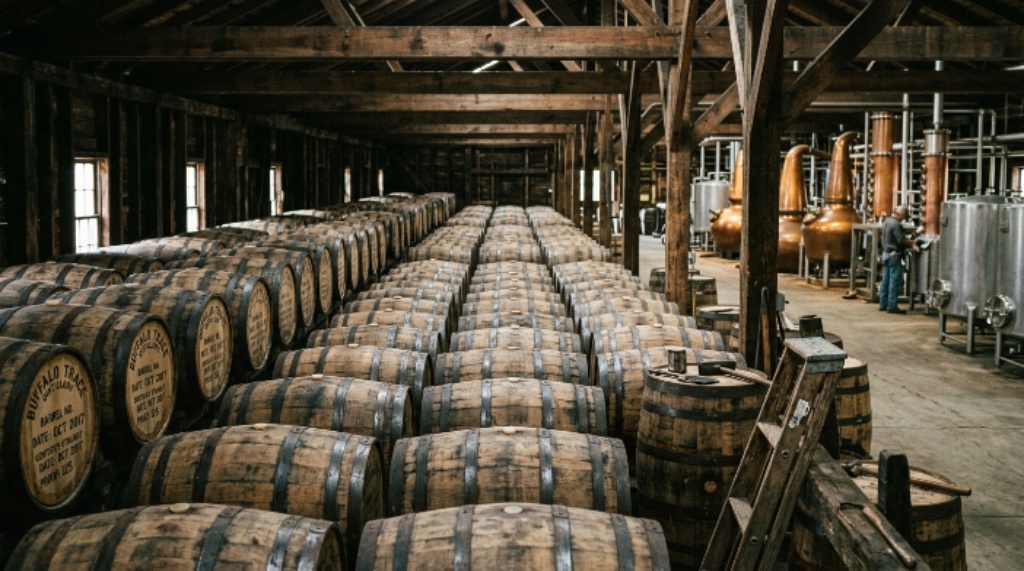
Bourbon barrels are essential because they create much of a whiskey’s color, aroma, flavor, and smooth finish during aging. New charred oak barrels are also a legal requirement for bourbon production, making them one of the most important tools in every distillery.
The global bourbon industry produces millions of barrels every year, while Kentucky alone stores well over 16 million aging barrels. Experts also estimate that oak barrels contribute most of a bourbon’s final flavor profile, proving their remarkable influence on every bottle. Whether you are new to distilling or simply curious, understanding bourbon barrels explains why quality spirits depend on careful barrel selection and aging.
What Is a Bourbon Barrel?
A bourbon barrel is a new oak barrel with a charred interior surface. Distillers fill it with freshly distilled spirit for maturation.
Most producers use American white oak because it combines strength with excellent flavor characteristics. The wood naturally supports long aging without leaking.
Unlike many other whiskey barrels, bourbon barrels must always be new. Reusing them for bourbon production is not permitted under federal standards.
Why Bourbon Barrels Matter So Much
The barrel does far more than hold whiskey during storage. It actively transforms raw spirit into mature bourbon.
Without barrel aging, fresh distillate remains clear and lacks complexity. Time inside charred oak develops sweetness, color, aroma, and balance.
Every season also changes the aging process. Temperature shifts move whiskey into and out of the wood repeatedly.
The Legal Requirement Behind Bourbon Barrels
Federal standards require bourbon to age in new charred oak containers. This rule separates bourbon from many other whiskey styles.
Distillers cannot legally label their product as bourbon without meeting this requirement. Every qualified producer follows the same basic barrel standard.
Although barrel size may vary, the new charred oak requirement remains unchanged. Therefore, barrel quality directly affects every production batch.
How Charring Changes the Wood
Charring burns the inside surface before filling each barrel. This creates a protective charcoal layer inside the wood.
The char removes unwanted compounds while opening the wood structure. Consequently, whiskey absorbs desirable flavors more efficiently.
Different char levels create different flavor results. Distillers carefully select the level matching their intended bourbon style.
Common Char Levels
- Light char produces softer oak influence.
- Medium char increases vanilla and caramel notes.
- Heavy char delivers deeper smoke and richer sweetness.
- Many producers prefer Char Number Four because it creates balanced complexity.
Why American White Oak Is Preferred
American white oak offers unique qualities unavailable in many other hardwood species. It remains durable while allowing controlled oxygen exchange.
Its tight grain naturally prevents excessive leaking during long storage. At the same time, microscopic pores support gradual maturation.
The wood also contains valuable natural compounds. These compounds build bourbon’s signature flavor over time.
Key Flavor Compounds
- Vanillin creates familiar vanilla notes.
- Oak lactones contribute coconut and woody aromas.
- Caramelized sugars add sweetness.
- Tannins provide structure and finish.
- Toasted lignin creates spice and smoky character.
How Barrels Shape Bourbon Flavor
Fresh spirit enters the barrel almost colorless. During aging, it gradually extracts compounds from the oak.
Meanwhile, oxygen slowly enters through the wood. This controlled exposure softens harsh alcohol notes.
Chemical reactions continue every year. As a result, bourbon develops increasing depth and complexity.
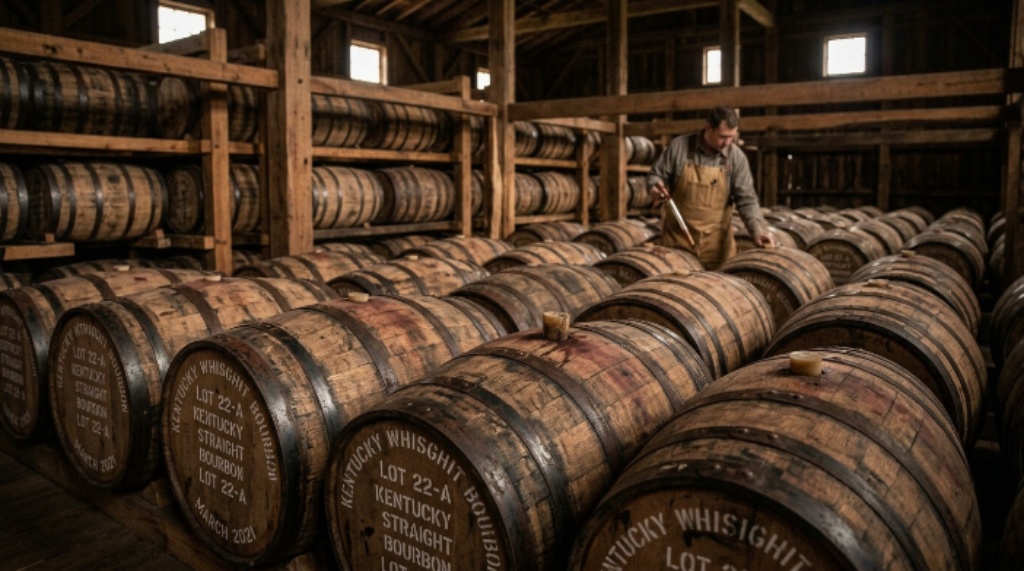
Different warehouses also influence aging speed. Location, humidity, and seasonal temperatures all change the final profile.
The Science Behind Barrel Aging
Barrels function as natural flavor reactors throughout maturation. Every environmental change affects whiskey movement inside the wood.
Warm weather expands the liquid into oak fibers. Cooler temperatures draw it back into the barrel.
Each cycle extracts additional flavor compounds. Consequently, aging becomes more effective over several years.
Slow oxidation also improves smoothness. Harsh notes gradually fade while richer aromas continue developing.
Why Distillers Never Ignore Barrel Quality
Even perfectly distilled whiskey cannot overcome poor barrel quality. Every defect eventually appears inside the finished product.
Experienced distillers inspect each barrel before filling it. They reject barrels showing cracks or construction problems.
Consistent barrel quality also creates reliable product consistency. Customers expect familiar flavors from every release.
Choosing the Right Barrel
Selecting barrels requires balancing several production goals. Flavor, aging period, and warehouse conditions all matter.
Smaller barrels mature whiskey faster because of greater wood contact. Larger barrels generally support slower development.
Most commercial producers still prefer traditional full sized barrels. These provide dependable aging with balanced extraction.
Factors Distillers Evaluate
- Oak quality
- Grain direction
- Char level
- Moisture content
- Barrel craftsmanship
- Intended aging duration
What Happens After Bourbon Aging?
A bourbon barrel usually begins a second career after its first use. Many other spirit producers purchase these used barrels.
Scotch whisky producers frequently mature spirits in former bourbon barrels. Rum, tequila, brandy, and some craft beers also benefit from them.
This reuse creates a sustainable barrel lifecycle. One well made barrel may influence several different beverages across many years.
Common Mistakes New Distillers Make
Some beginners focus only on fermentation or distillation equipment. However, barrel selection deserves equal attention.
Choosing poor quality barrels often limits flavor development. Even extended aging cannot fully correct that mistake.
Another mistake involves unrealistic aging expectations. Time alone cannot replace proper barrel craftsmanship.
Ignoring warehouse conditions also reduces consistency. Temperature and humidity deserve careful monitoring throughout maturation.
Practical Tips for Better Barrel Management
Proper barrel care supports better whiskey quality. Small improvements often produce noticeable long term results.
Keep storage conditions reasonably consistent whenever possible. Sudden environmental changes increase unnecessary stress.
Inspect barrels before filling every batch. Early detection prevents expensive product losses.
Track every barrel using accurate production records. Good documentation improves blending decisions later.
Rotate warehouse inspections throughout the year. Regular monitoring identifies developing issues quickly.
Sustainability and Bourbon Barrels
Oak remains a renewable natural resource when forests receive responsible management. Many cooperages support sustainable harvesting practices.
Every harvested tree contributes multiple barrels and additional wood products. Very little material goes unused during manufacturing.
After bourbon aging ends, barrels continue serving other industries. This extended lifecycle reduces unnecessary waste.
Some retired barrels even become furniture, flooring, garden planters, or decorative home pieces. Their usefulness extends far beyond distilling.
Conclusion
Bourbon barrels remain one of the most valuable tools in modern distilling because they shape flavor, color, aroma, and texture simultaneously. Their combination of legal importance, natural chemistry, and traditional craftsmanship explains why every successful bourbon begins with carefully selected new charred oak.
Whether you plan to enter distilling or simply appreciate fine whiskey, learning how bourbon barrels work gives you a deeper understanding of every pour. Explore different barrel aged spirits and notice how wood transforms each unique expression.
FAQs
Why must bourbon use new barrels?
Federal standards require bourbon to age in new charred oak barrels.
Why is American white oak commonly used?
It provides durability, controlled oxygen exchange, and excellent flavor compounds.
Do bourbon barrels add color naturally?
Yes, the oak naturally gives bourbon its amber color during aging.
Can bourbon barrels be reused for bourbon?
No, bourbon producers must use new charred oak barrels for every batch.
Why do used bourbon barrels remain valuable?
They continue adding desirable flavors to many other spirits and beverages.