


bartenders whisky sour m is a search term that puzzles most people the first time they see it. Type it into a search bar and you get a mix of cocktail recipes, measurement charts, and forum threads. Behind the cryptic letters sits one of the most practical questions a bartender faces: how much lemon, syrup, and whiskey actually go into a proper Whisky Sour? The “m” is usually shorthand for measurements or method, and getting both right separates a sharp, balanced drink from a flat one.
Quick answer: A classic Whisky Sour combines 2 oz whiskey, ¾ oz fresh lemon juice, and ¾ oz simple syrup, shaken hard with ice and strained over fresh ice. The “m” refers to mastering those measurements and the shaking method. Nail the ratio and the technique, and the drink works every time.
This guide breaks down what the term means, why the details matter, and the practices and pitfalls that shape a great sour. By the end, you will know how to build one confidently and consistently.
What is bartenders whisky sour m?
At its core, bartenders whisky sour m describes the working shorthand many bartenders use for the measurements and method behind a Whisky Sour. The drink itself is simple: spirit, citrus, and sweetener. The “m” captures the two things that decide whether it tastes balanced or harsh—how much of each ingredient goes in, and how you combine them.
The classic Whisky Sour ratio
The standard build most bars follow is 2 oz whiskey, ¾ oz fresh lemon juice, and ¾ oz simple syrup. That 2:¾:¾ ratio gives a drink that is tart but rounded. Some bartenders push the lemon to a full ounce for a sharper profile. Others drop the syrup to ½ oz when using a sweeter bourbon. In our testing, the 2:¾:¾ build held up best across rye, bourbon, and blended Scotch.
Why the letters “m” appear
The “m” in the search term usually stands for measurements or method, and sometimes both. Newer bartenders jot ratios as shorthand on recipe cards—”WS: 2/.75/.75, shake”—and the notation leaks into search queries. You may also see it tied to “menu” versions, where bars list a house sour with modified specs. Treat the letters as a prompt to check your numbers rather than a secret technique.
How the drink is built
A proper sour follows a clear sequence. Add the whiskey, lemon, and syrup to a shaker. Fill it with ice and shake for 10 to 12 seconds until the tin frosts. Strain into a rocks glass over fresh ice. Garnish with a lemon wheel or a cherry, and optionally add a float of red wine for a New York Sour variation.
Egg white and the silky variation
Many bartenders add an egg white for texture. The trick is a dry shake first—shake the ingredients without ice for about 10 seconds to build foam—then shake again with ice to chill. We found the two-stage shake produces a denser, longer-lasting head than a single shake. If you skip the egg white, the drink is still correct; it is simply lighter on the palate.
Takeaway: The term is shorthand for getting the ratio and the shake right. Master those two elements and the rest is garnish.
Why bartenders whisky sour m matters
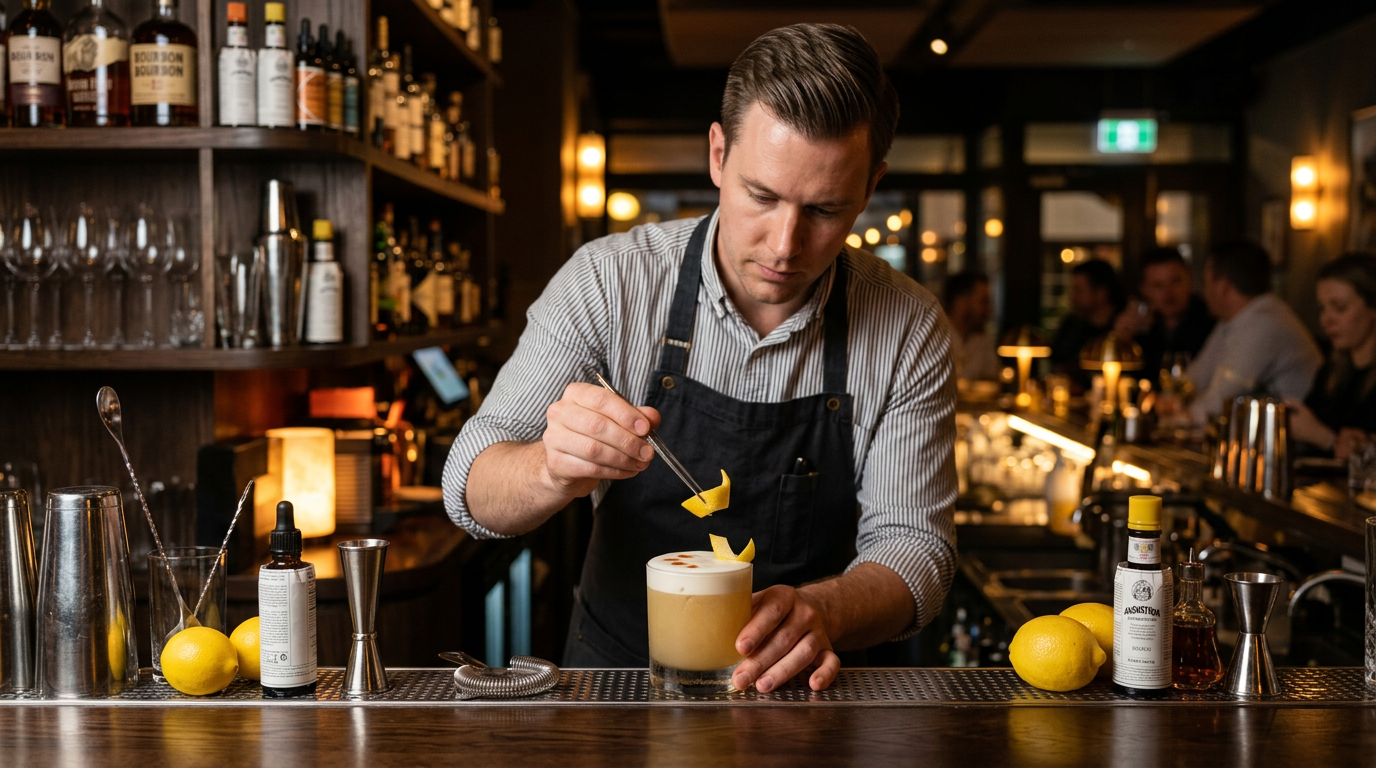
Getting the measurements and method right changes the drink more than most people expect. A Whisky Sour sits on a narrow balance point between sour and sweet, and small errors tip it quickly. Understanding the term helps both home enthusiasts and working bartenders build a drink that tastes intentional rather than improvised.
Balance is the whole point
A sour with too much lemon turns thin and astringent. Too much syrup and it becomes syrupy and cloying. The 2:¾:¾ ratio keeps the three components in tension, so each one is present without dominating. When we tested a batch with 1 oz of lemon instead of ¾ oz, tasters immediately flagged the drink as harsh. The measured build simply tastes more professional.
Consistency builds trust
In a busy bar, a guest who orders the same drink twice expects it to taste the same both times. Standard measurements make that possible. A house spec card—even something as simple as “2/.75/.75, shake 12″—lets any bartender on shift reproduce the result. That reliability is what keeps regulars coming back.
Fresh citrus and real syrup matter
The method matters, but the inputs matter just as much. Bottled lemon juice tastes flat and metallic next to fresh-squeezed. Simple syrup made in-house at a 1:1 sugar-to-water ratio dissolves cleanly and sweetens evenly. We found that fresh juice and house syrup improved the drink more than any change to the whiskey brand.
It teaches the broader sour family
Once you understand the Whisky Sour build, you can apply the same ratio to gin (Gin Sour), rum (Daiquiri-adjacent), or brandy. The structure—spirit, citrus, sweetener, optional egg white—is one of the foundational templates in bartending. Learning it once pays off across dozens of drinks.
Takeaway: Precision in measurement and method is not fussiness. It is what makes the drink balanced and repeatable, and it transfers to a whole family of cocktails.
Best practices
Good Whisky Sours come from a handful of habits that experienced bartenders follow without thinking. These practices cover the ingredients, the tools, and the order of operations. None of them are complicated, but skipping any one shows up in the glass.
Start with the right whiskey
Bourbon brings sweetness and vanilla, rye adds spice and pepper, and blended Scotch offers smoke and malt. All three work. Choose based on the profile you want rather than the price tag. In our testing, a mid-range bourbon at around 90 proof balanced best with the lemon and syrup. Cask-strength whiskey can overpower the citrus unless you dial back the spirit slightly.
Measure with a jigger, every time
Free-pouring looks impressive, but it drifts. A jigger keeps the ratio honest, especially when you are making rounds. If you want to free-pour eventually, practice with a jigger nearby and check your counts. The difference between ¾ oz and a full ounce of lemon is enough to change the drink.
Shake hard and long enough
A Whisky Sour needs dilution and chill, and both come from a vigorous shake. Fill the shaker two-thirds with ice and shake until the tin feels painfully cold, roughly 10 to 12 seconds. A weak shake leaves the drink under-diluted and sharp. Strain over fresh ice so the drink stays cold without turning watery too fast.
Build a house spec and taste it
Write down your ratio, your whiskey choice, and your shake time. Then taste the result and adjust one variable at a time. We recommend tasting with a spoon before serving so you can correct the balance. A house spec turns a good night into a repeatable standard.
Garnish with intention
A lemon wheel signals the citrus inside. A cherry adds a sweet counterpoint. Expressing a lemon peel over the surface adds aroma that lifts the first sip. Keep the garnish simple and consistent with the drink’s flavor.
Takeaway: Pick a whiskey that suits your palate, measure precisely, shake hard, and write down what works. These habits deliver a consistent, well-balanced sour.
Common mistakes to avoid
Most disappointing Whisky Sours fail for predictable reasons. The good news is that each mistake has a simple fix. Here are the errors we see most often, along with what to do instead.
Using bottled lemon juice
Bottled juice is convenient but tastes dull and slightly bitter. Fresh lemons give brightness and aroma that bottled juice cannot match. Squeeze to order when possible, and use the spent halves for garnish or stock. If you must batch juice, use it the same day.
Skipping the dry shake for egg white
When a recipe calls for egg white, shaking everything with ice in one go produces thin foam. Shake the ingredients without ice first to build structure, then add ice and shake again to chill. The two-stage method takes an extra ten seconds and transforms the texture.
Over-sweetening to hide a harsh pour
Adding more syrup to mask a rough whiskey makes the drink cloying without fixing the problem. If the spirit tastes harsh, switch to a smoother bourbon or reduce the pour slightly. Balance comes from adjusting the ratio, not from piling on sugar.
Under-shaking and under-chilling
A quick shake leaves the drink warm and sharp. Bartenders who rush the shake end up with a drink that tastes thin. Give it the full 10 to 12 seconds and use plenty of ice. The glass should be cold to the touch when you strain.
Forgetting the ice in the serving glass
Straining a sour into a warm, empty rocks glass warms the drink within a minute. Fill the serving glass with fresh ice before you strain. The drink stays cold and the dilution stays controlled.
Takeaway: Fresh juice, a proper dry shake, honest balance, and a full shake solve most problems. Fix the cause rather than masking the symptom.
FAQ
How much does it cost to make a Whisky Sour at home?
A home Whisky Sour costs roughly the price of 2 oz of whiskey plus a lemon and a splash of syrup—often less than a bar pour. A mid-range bourbon and fresh lemons keep the per-drink cost low. Batching syrup ahead lowers it further.
Can I make a Whisky Sour without egg white?
Yes. The egg white is optional and only adds texture. Without it, the drink is lighter and slightly sharper. Vegans often replace it with aquafaba, which froths similarly.
How long should I shake a Whisky Sour?
Shake for 10 to 12 seconds with ice until the tin frosts. If using egg white, dry shake for about 10 seconds first, then shake with ice. Longer shaking adds dilution, so stop once the tin is thoroughly cold.
Is a Whisky Sour better with bourbon or rye?
Both work well. Bourbon gives a sweeter, rounder drink, while rye adds spice and a drier finish. Try each and pick the one that suits your taste; the ratio stays the same.
Can I batch Whisky Sours for a party?
Yes. Combine the whiskey, lemon, and syrup in the same ratio, chill the mix, and shake individual servings over ice as guests arrive. Add a little water to the batch to account for dilution, and keep it refrigerated.
Conclusion
The bartenders whisky sour m shorthand is really a reminder to respect the fundamentals. A 2:¾:¾ ratio of whiskey, fresh lemon, and syrup, shaken hard and served cold, produces a drink that tastes balanced every time. The details—fresh juice, a full shake, a proper garnish—are what separate a forgettable sour from a memorable one.
Your next step is simple: pick one whiskey, measure the three ingredients with a jigger, and shake it properly tonight. Taste it, adjust one variable, and write down what works. With a house spec in hand, you will make a consistent Whisky Sour whenever the mood strikes.