
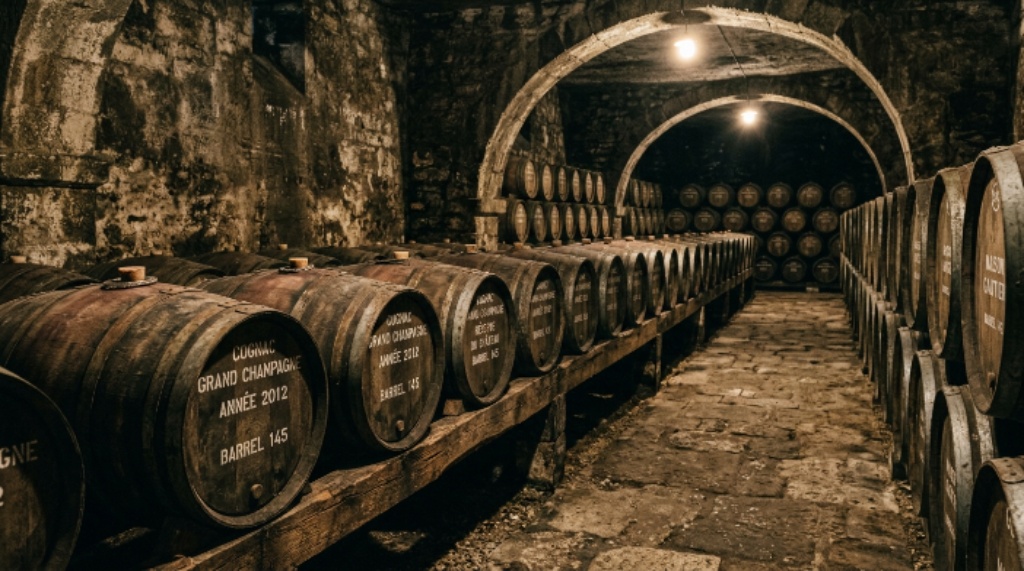
French oak barrels shape Cognac by slowly adding tannins, vanilla notes, gentle spice, and controlled oxygen exposure. Limousin and Tronçais oak remain the preferred choices because they create balanced flavor, aroma, color, and texture during aging.
Cognac must mature in oak barrels for at least two years before earning its name. Around 2% to 3% of the spirit typically evaporates each year during aging, while the remaining liquid becomes richer and more concentrated over time.
Why French Oak Matters for Cognac
French oak has earned its reputation through centuries of barrel making and spirit aging. Its natural structure creates ideal conditions for slow flavor development.
Unlike many other woods, French oak releases flavor gradually instead of overwhelming the spirit. Therefore, distillers gain better control throughout the aging process.
The two primary oak sources each contribute unique characteristics. Both forests produce excellent barrels, although each creates different flavor profiles.
Limousin Oak
Limousin oak features a wider grain structure than many other oak varieties. Consequently, it transfers tannins and wood compounds more quickly into the spirit.
This oak often creates bold spice, dried fruit, toasted wood, and vanilla notes. Many producers use it during the early stages of maturation.
Tronçais Oak
Tronçais oak has a finer grain and slower extraction rate. As a result, it develops elegant aromas with greater subtlety.
This wood often highlights floral, nutty, and silky characteristics. Many premium Cognac houses value its refined influence.
How French Oak Changes Cognac During Aging
Freshly distilled Cognac starts as a clear and powerful spirit. However, years inside French oak completely transform its appearance and flavor.
The wood slowly releases natural compounds into the liquid. Meanwhile, tiny amounts of oxygen pass through the barrel walls.
These two processes work together every single day. Therefore, aging becomes a gradual chemical transformation instead of simple storage.
Color Development
Newly distilled Cognac contains almost no natural color. Oak barrels slowly create golden, amber, and deep mahogany shades.
Longer maturation generally produces darker colors with greater complexity. Still, cellar conditions also influence the final appearance.
Flavor Development
French oak contributes several desirable flavor compounds throughout maturation. Each compound affects the final spirit differently.
Common flavor contributions include:
- Vanilla
- Baking spices
- Toasted nuts
- Caramel notes
- Dried fruit
- Cocoa hints
- Soft woody character
These flavors continue developing as oxidation and wood extraction progress together.
Aroma Evolution
Aging improves both aroma intensity and balance. Harsh alcohol notes gradually soften while complex scents emerge.
Over time, aromas may include honey, figs, roasted almonds, leather, orange peel, and gentle floral notes. Each barrel develops its own unique personality.
The Science Behind Barrel Aging
Oak barrels perform much more than simple storage. They function as active tools that reshape the spirit every year.
The wood contains microscopic pores that allow controlled oxygen movement. Consequently, oxidation occurs at a slow and steady pace.
Oxidation softens sharp alcohol edges while encouraging new aromatic compounds. Therefore, mature Cognac becomes smoother and more layered.
Natural tannins from the oak also improve mouthfeel and structure. They help create the elegant finish associated with well aged Cognac.
Why Barrel Toasting Makes a Difference
Every barrel receives heat during construction. This important step changes the wood before it ever holds Cognac.
Coopers carefully toast the interior over controlled fires. Different toast levels produce different flavor outcomes.
Light toasting preserves fresh wood character and subtle spice. Medium toasting increases vanilla and caramel flavors.
Heavy toasting creates richer notes resembling chocolate, coffee, and roasted nuts. Distillers select toast levels according to their desired style.
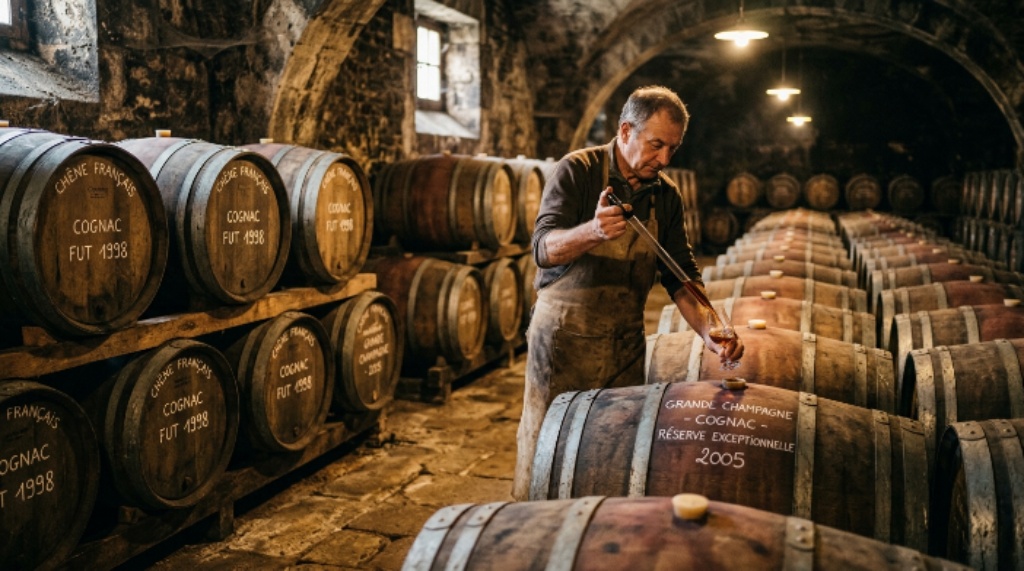
New Barrels Versus Older Barrels
Most producers avoid aging Cognac in new barrels forever. Instead, they combine different barrel ages throughout maturation.
New barrels provide stronger wood influence during the beginning. They quickly add color, tannins, and fresh oak flavors.
Older barrels contribute less wood character but continue supporting oxidation. Therefore, they allow gentle maturation without excessive oak extraction.
Many master blenders move Cognac between barrels as it matures. This approach creates greater balance and complexity.
The Importance of Barrel Size
Barrel size influences how quickly Cognac develops. Smaller barrels expose more liquid to wood contact.
Greater wood contact speeds flavor extraction and color development. However, excessive extraction can overpower delicate fruit notes.
Larger barrels encourage slower and more controlled maturation. Therefore, producers often match barrel size with aging goals.
Cellar Conditions Also Shape the Spirit
French oak alone cannot determine the final result. The surrounding cellar environment plays an equally important role.
Temperature changes affect expansion and contraction inside the barrel. Consequently, the spirit moves deeper into the wood.
Humidity also changes evaporation patterns throughout maturation. Each cellar creates slightly different aging conditions.
Cool, stable environments generally encourage slower flavor development. Meanwhile, warmer spaces often accelerate maturation.
Understanding the Angel’s Share
Every barrel naturally loses liquid through evaporation. Distillers call this process the angel’s share.
Although evaporation reduces volume, it concentrates many remaining flavors. Therefore, older Cognac often displays greater richness and depth.
This gradual loss represents a normal part of premium spirit production. Producers accept it because quality improves through careful aging.
How Long Should Cognac Age?
Longer aging does not always guarantee better quality. Instead, balance remains the ultimate goal.
Young Cognac often highlights fresh fruit and lively floral notes. These characteristics appeal to many drinkers.
Extended aging introduces deeper complexity and smoother texture. However, excessive wood influence may eventually hide delicate fruit flavors.
Experienced cellar masters monitor every barrel regularly. They decide the ideal moment for blending or transferring the spirit.
Practical Tips for Understanding Barrel Influence
Consumers can better appreciate Cognac by recognizing wood related characteristics. Paying attention to several details makes tasting more rewarding.
Look for these signs during tasting:
- Vanilla sweetness
- Soft baking spices
- Smooth finish
- Balanced oak presence
- Rich amber color
- Gentle toasted aromas
- Long lingering flavor
Comparing different age statements also reveals how French oak changes the spirit over time.
Common Myths About French Oak Barrels
Many people believe older barrels always create better Cognac. In reality, barrel management matters more than simple age.
Another myth claims stronger oak flavor means higher quality. Balanced integration actually produces the finest results.
Some also assume every French oak barrel tastes identical. Different forests, grain patterns, toast levels, and cellar conditions create noticeable differences.
Why Master Blenders Value French Oak
Master blenders depend on consistency across many years. French oak offers predictable performance with excellent aging potential.
Each barrel contributes slightly different characteristics during maturation. Therefore, blending combines these strengths into a harmonious final product.
Experienced blenders carefully select barrels with complementary flavors. Their expertise creates the signature style consumers recognize.
Choosing Cognac With Excellent Oak Character
Well balanced Cognac should never taste overwhelmingly woody. Instead, oak should support fruit, spice, and floral notes.
Read age classifications carefully before purchasing. Older expressions generally display greater oak complexity.
Taste slowly and notice how flavors change after each sip. Balanced French oak influence becomes more noticeable with careful attention.
Conclusion
French oak remains the foundation of exceptional Cognac because it delivers controlled flavor extraction, gentle oxidation, and remarkable complexity. Limousin and Tronçais oak each contribute unique strengths, while skilled barrel management determines the final character. Explore different Cognac styles and age statements to experience firsthand how French oak transforms a clear spirit into a refined masterpiece.
FAQs
What makes French oak ideal for Cognac?
French oak provides balanced tannins, controlled oxygen exchange, and refined flavor development.
Does every Cognac use the same type of French oak?
No, producers commonly use Limousin oak, Tronçais oak, or a combination of both.
Why does Cognac become darker with age?
Natural compounds from the oak slowly give the spirit its amber and mahogany colors.
Can Cognac stay in one barrel forever?
No, producers often transfer Cognac between barrels to maintain proper balance.
Does older Cognac always taste better?
No, the best Cognac depends on balanced aging rather than maximum age alone.