
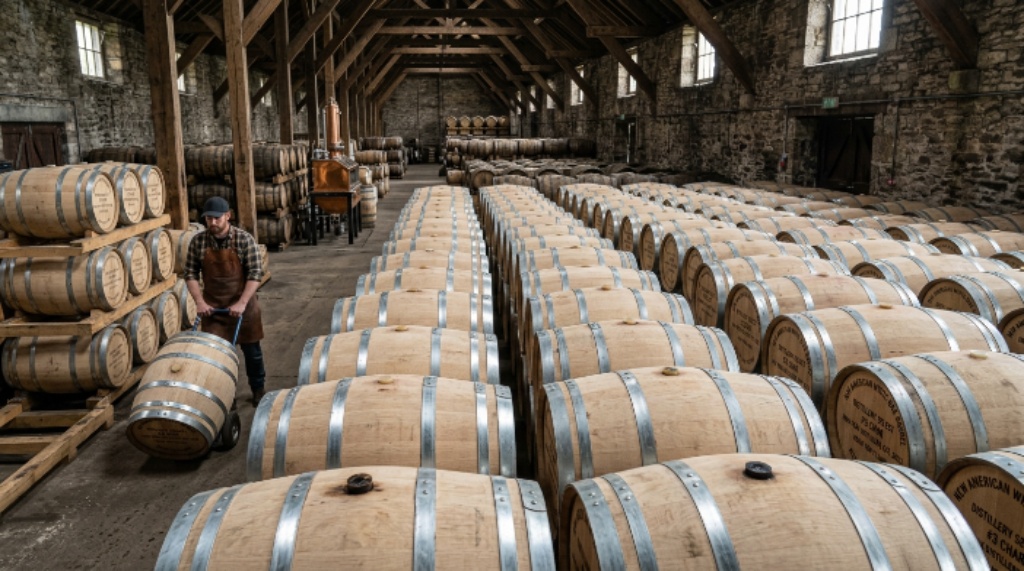
Fresh oak barrels shape whiskey more than any other single aging tool. New oak adds color, aroma, flavor, and texture while supporting slow maturation through controlled oxygen exchange. Whiskey gains roughly 60% to 80% of its final character during barrel aging. New charred oak barrels also remain a legal requirement for bourbon production, making fresh oak essential for its signature profile.
Why New Oak Barrels Matter
New oak barrels contain natural compounds that interact with maturing whiskey. Every fill extracts fresh flavors directly from untouched wood.
Unlike reused barrels, fresh oak provides maximum flavor potential. Therefore, distillers rely on it when they want bold character and consistent quality.
What Makes Fresh Oak Different?
Fresh oak has never aged another spirit. As a result, every layer of wood remains rich with natural compounds.
Those compounds dissolve gradually into whiskey throughout maturation. Consequently, the spirit develops greater complexity over time.
Rich Natural Flavor Compounds
Oak naturally contains lignin, hemicellulose, tannins, and oak lactones. Each compound contributes different flavor characteristics.
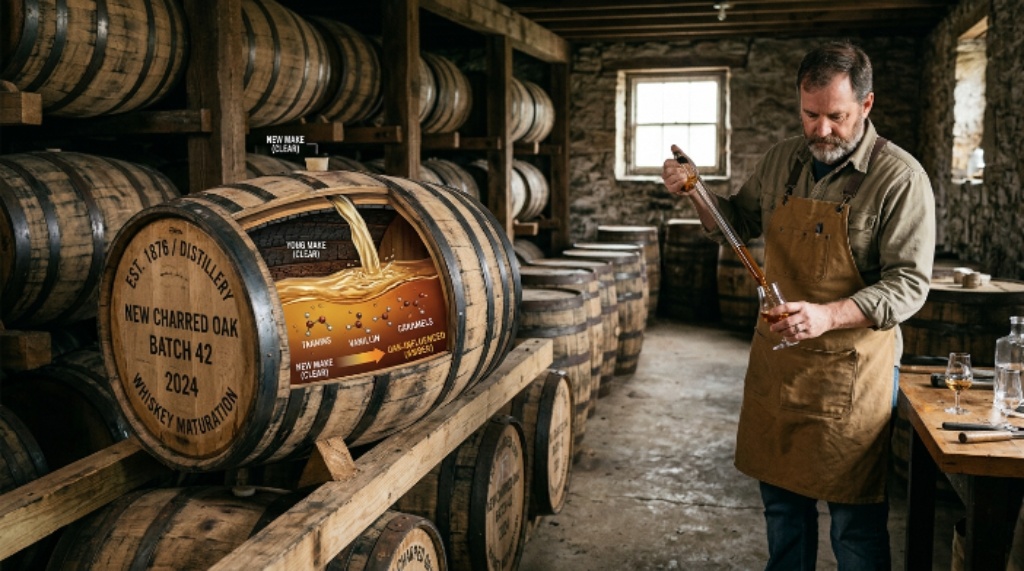
Lignin creates vanilla notes during charring. Meanwhile, hemicellulose produces caramel sweetness after heat transforms natural wood sugars.
Stronger Wood Influence
Fresh oak delivers a stronger impact than previously used barrels. Every season pulls additional flavor from deeper wood layers.
This process creates a richer whiskey with greater depth. Therefore, new barrels remain popular for bold whiskey styles.
How Charring Changes Fresh Oak
Barrel makers char the inside surface using open flames. Heat transforms the wood before whiskey enters the barrel.
Charring creates a charcoal layer over caramelized wood. Consequently, the whiskey extracts sweeter and smoother flavors.
Flavor Development
Different char levels create different flavor profiles. Lighter char often highlights spice and wood.
Heavier char increases caramel, vanilla, and darker toasted flavors. Additionally, deeper char may soften harsh spirit notes.
Natural Filtration
The charcoal layer acts like a natural filter. It helps remove unwanted sulfur compounds during aging.
Because of this process, whiskey becomes smoother over time. The final spirit also develops a cleaner finish.
The Aging Process Inside Fresh Oak
Fresh oak barrels constantly interact with whiskey throughout maturation. Temperature changes move liquid into and out of the wood.
This repeated movement extracts flavor while encouraging slow oxidation. Therefore, aging creates balance instead of simple woodiness.
Seasonal Expansion
Warm weather expands whiskey into the wood pores. Cooler temperatures pull it back toward the barrel center.
Each cycle adds more complexity. Consequently, seasonal climate strongly affects maturation speed.
Oxygen Exchange
Oak naturally breathes through tiny pores. Small amounts of oxygen enter throughout aging.
Controlled oxidation softens harsh alcohol notes. Meanwhile, fresh fruit, spice, and vanilla aromas become more integrated.
Common Flavors Created by Fresh Oak
Fresh oak produces several recognizable whiskey flavors. Many enthusiasts identify these notes immediately.
Some flavors become stronger with longer maturation. Others remain subtle depending on barrel design.
- Vanilla
- Caramel
- Toffee
- Coconut
- Baking spices
- Cinnamon
- Clove
- Toasted oak
- Brown sugar
- Light smoke
- Roasted nuts
- Dark chocolate
American Oak Versus European Oak
Different oak species produce noticeably different whiskey styles. Distillers select wood based on their desired outcome.
American white oak remains the most common option. However, European oak also offers unique advantages.
American White Oak
American white oak produces sweeter whiskey. Vanilla, coconut, caramel, and honey often dominate the flavor profile.
Its dense structure also reduces leakage. Therefore, it remains the preferred choice for many American distilleries.
European Oak
European oak contributes stronger tannins and spice. Dried fruit and nut flavors also appear more frequently.
Many premium finishing barrels use European oak. Consequently, some distillers combine both oak types for added complexity.
Fresh Oak Versus Used Oak
New and used barrels create very different whiskey experiences. Each serves a specific purpose during maturation.
Fresh barrels deliver maximum extraction. Used barrels provide a gentler influence.
| Feature | Fresh Oak | Used Oak |
| Flavor strength | High | Moderate |
| Vanilla notes | Strong | Mild |
| Color development | Fast | Slower |
| Wood sugars | High | Lower |
| Tannin content | Higher | Softer |
| Typical use | Bourbon | Scotch, Irish, Rum finishing |
Why Bourbon Requires Fresh Oak
Federal regulations require bourbon to mature in new charred oak barrels. This rule helps create bourbon’s distinctive identity.
Fresh oak gives bourbon its deep amber color quickly. It also develops classic vanilla, caramel, and toasted sugar flavors.
After the first fill, those barrels usually begin a second life elsewhere. Many whiskey producers around the world value these seasoned barrels.
How Barrel Size Influences Whiskey
Barrel dimensions affect wood contact. Smaller barrels expose more surface area to the spirit.
Greater contact speeds flavor extraction. However, rapid extraction can sometimes reduce long term complexity.
Larger barrels mature whiskey more slowly. Therefore, many producers balance barrel size with intended aging time.
Factors That Affect Fresh Oak Performance
Several conditions influence barrel maturation. Distillers monitor these variables carefully.
Important factors include:
- Oak species
- Wood grain density
- Air drying period
- Toast level
- Char level
- Barrel size
- Warehouse temperature
- Humidity
- Aging duration
- Barrel location
Every combination creates slightly different whiskey. Consequently, no two barrels mature exactly alike.
Challenges of Using New Oak
Fresh oak offers many benefits. However, it also requires careful management.
Too much wood influence may overwhelm delicate spirit flavors. Therefore, distillers monitor maturation closely.
Long aging can increase tannins. Excessive tannins sometimes create bitterness or dryness.
Fresh barrels also cost more than reused barrels. Nevertheless, many producers consider the investment worthwhile.
Practical Tips for Whiskey Enthusiasts
Understanding barrel influence improves whiskey appreciation. Small details often explain major flavor differences.
Consider these simple tasting tips:
- Read barrel information before purchasing.
- Compare fresh oak and finished whiskey styles.
- Notice vanilla and caramel intensity.
- Taste different char levels.
- Sample American and European oak expressions.
- Allow whiskey to breathe before drinking.
- Record tasting notes for future comparisons.
These habits help identify barrel influence more accurately. Over time, tasting skills naturally improve.
The Future of Fresh Oak Barrels
Modern cooperages continue improving traditional barrel making. Better wood selection creates greater consistency.
Some producers now test different oak species together. Others experiment with specialized seasoning methods before barrel construction.
Sustainability also receives increasing attention. Responsible forestry helps ensure future oak supplies while protecting natural forests.
Innovation continues without replacing traditional craftsmanship. Therefore, fresh oak remains central to premium whiskey production.
Conclusion
Fresh oak barrels remain one of the most important ingredients in whiskey making. They create color, aroma, sweetness, spice, and texture while supporting gradual maturation through controlled oxygen exposure.
Whether you enjoy bourbon or other whiskey styles, understanding fresh oak helps explain every sip. Explore different barrel types, compare tasting notes, and experience how oak transforms clear spirit into remarkable whiskey.
FAQs
Does fresh oak make whiskey taste stronger?
Yes, fresh oak produces bolder wood flavors, richer sweetness, and deeper complexity than used barrels.
Why does bourbon use new oak barrels?
Bourbon regulations require aging in new charred oak barrels to create its traditional flavor profile.
How long does whiskey stay in new oak barrels?
Aging time varies, although many premium whiskeys mature for several years before bottling.
Does barrel char affect whiskey flavor?
Yes, different char levels influence vanilla, caramel, spice, color, and overall smoothness.
Can fresh oak overpower whiskey?
Yes, excessive aging in fresh oak may create overly woody or tannic flavors.