
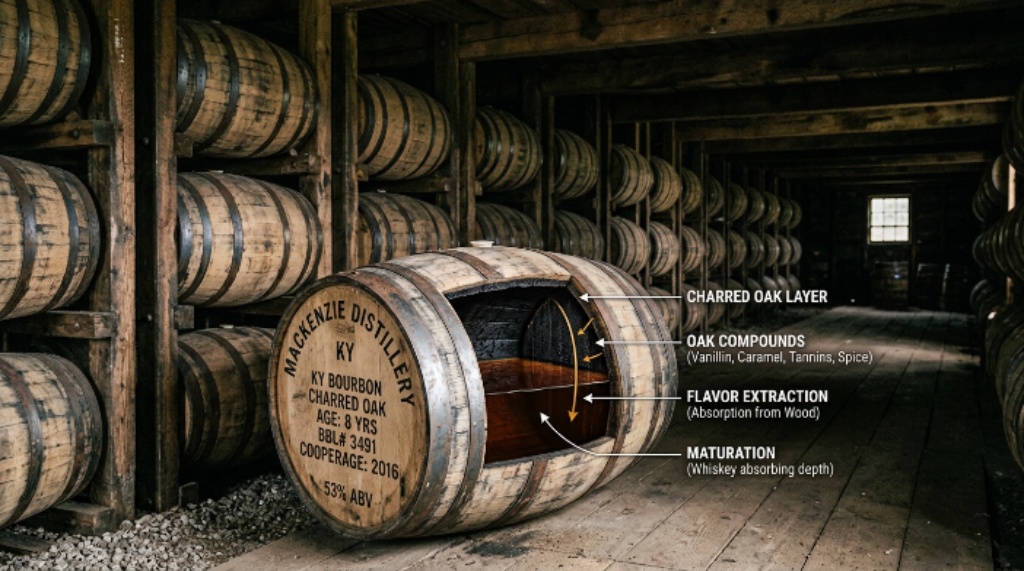
Whiskey develops its signature flavor because it matures inside oak barrels, where wood, oxygen, and time work together. The barrel contributes most of the whiskey’s color and many familiar notes, including vanilla, caramel, spice, and toasted oak.
Many experts estimate that up to 70 percent of a whiskey’s final flavor comes from barrel aging. Additionally, barrels naturally lose a small amount of spirit through evaporation each year, creating a richer and more concentrated taste over time.
Why Whiskey Barrels Matter
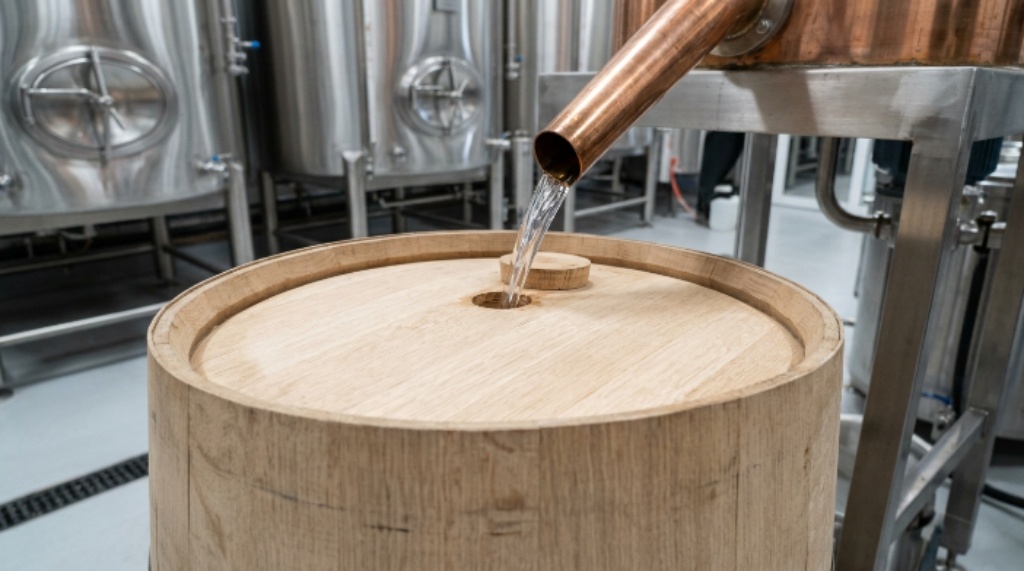
Freshly distilled whiskey begins as a clear spirit with a sharp character. Aging inside an oak barrel gradually softens those rough edges. As a result, the whiskey becomes smoother, darker, and more balanced.
Oak remains the preferred wood because it combines strength with ideal porosity. Furthermore, its natural compounds create flavors that other woods rarely deliver. This combination explains why premium whiskey producers continue using oak barrels worldwide.
How Barrel Aging Changes Whiskey
Barrel aging involves much more than simple storage. Every season changes how whiskey moves through the wood. Consequently, each barrel creates a slightly different flavor profile.
Temperature changes cause the spirit to expand and contract naturally. During warmer periods, whiskey penetrates deeper into the wood. When temperatures cool, the liquid returns carrying new flavors and aromas.
Small amounts of oxygen also enter through the barrel walls. Therefore, harsh alcohol notes gradually soften while complex aromas continue developing.
The Role of Oak Wood
Oak contains natural compounds that directly shape whiskey flavor. These compounds slowly dissolve into the spirit during aging. Consequently, every sip reflects years of interaction between wood and whiskey.
American white oak produces sweeter flavors with noticeable vanilla and coconut notes. European oak often creates stronger spice, dried fruit, and tannin characteristics. Both options offer distinct advantages for different whiskey styles.
American White Oak
American white oak remains the standard choice for bourbon production. Its dense structure controls leakage while allowing gradual flavor extraction. Therefore, many distillers favor this dependable wood.
Common tasting notes include:
- Vanilla
- Caramel
- Coconut
- Honey
- Sweet oak
European Oak
European oak creates a bolder and more structured whiskey. Additionally, its higher tannin content increases complexity during long aging periods.
Typical flavor notes include:
- Clove
- Cinnamon
- Dried fruit
- Nutmeg
- Dark chocolate
Why Charring Makes a Difference
Before filling, most whiskey barrels receive an interior char. This controlled burning transforms the wood surface into a valuable flavor source. Consequently, the barrel contributes far more than raw wood flavors.
The char layer filters unwanted compounds while creating caramelized sugars. Therefore, whiskey develops smoother textures and richer aromas throughout maturation.
Different char levels influence the final character.
- Light char highlights wood sweetness.
- Medium char balances sweetness and spice.
- Heavy char increases smoke and bold oak flavors.
Toasting Versus Charring
Although many people confuse these processes, they create different results. Toasting gently heats the barrel without burning the surface completely. Meanwhile, charring creates a visible layer of charcoal.
Toasted barrels often deliver softer baking spice flavors. Charred barrels usually provide stronger vanilla, caramel, and smoky notes. Many distillers combine both techniques for added complexity.
Time and Flavor Development
Time allows chemical reactions to continue inside every barrel. However, older whiskey does not automatically taste better. Instead, balance matters more than age alone.
Young whiskey usually highlights grain flavors and fresh fruit notes. After several years, oak flavors become more noticeable. Eventually, mature whiskey develops greater harmony between wood and spirit.
Excessive aging may create too much oak influence. Therefore, experienced distillers regularly taste barrels before deciding the ideal bottling time.
Understanding the Angel’s Share
During aging, small amounts of whiskey naturally evaporate through the barrel. Distillers call this evaporation the angel’s share. Although volume decreases, flavor often becomes more concentrated.
Climate strongly affects evaporation rates. Warmer warehouses generally lose more liquid than cooler locations. Nevertheless, faster evaporation can also increase flavor development.
The angel’s share influences several characteristics.
- Richer aroma
- Greater flavor concentration
- Improved smoothness
- Higher barrel variation
Climate Shapes Every Barrel
Weather affects whiskey every single day. Seasonal changes repeatedly push liquid into and out of the oak. Consequently, climate becomes an essential ingredient despite never entering the barrel directly.
Hot climates usually accelerate maturation. Cooler climates encourage slower flavor development. Neither approach guarantees better whiskey because each creates unique characteristics.
Humidity also changes evaporation patterns. Therefore, identical barrels stored in different locations may produce noticeably different results.
Barrel Size and Its Influence
Barrel size changes how quickly whiskey interacts with oak. Smaller barrels expose more wood surface relative to the amount of liquid. Consequently, flavor develops much faster.
Larger barrels encourage slower and more gradual maturation. Many premium producers prefer this slower process because it creates better balance over time.
Smaller barrels may produce:
- Faster color development
- Stronger oak flavors
- Quicker maturation
- Increased evaporation
Larger barrels often provide:
- Greater complexity
- Better integration
- Slower extraction
- More balanced aging
First Fill and Reused Barrels
A brand new barrel delivers the strongest wood influence. Therefore, bourbon producers traditionally use new charred oak barrels.
Previously used barrels still contain valuable flavor compounds. However, they contribute gentler oak character during later aging cycles. Many whiskey styles benefit from these softer influences.
Some distillers also finish whiskey in barrels that previously held wine, rum, or sherry. This additional aging stage introduces subtle fruit, spice, or sweetness without overpowering the original whiskey.
Common Flavor Notes Created by Aging
Whiskey flavor results from many interacting compounds rather than one ingredient. Consequently, experienced tasters often identify several layers within one glass.
Popular flavor notes include:
- Vanilla
- Caramel
- Butterscotch
- Maple
- Coconut
- Cinnamon
- Clove
- Nutmeg
- Toasted nuts
- Dark chocolate
- Coffee
- Dried fruit
- Leather
- Tobacco
- Oak spice
Each barrel creates its own combination. Therefore, no two barrels produce completely identical whiskey.
How Distillers Monitor Maturation
Modern distillers never rely only on barrel age. Instead, they regularly sample whiskey throughout maturation. This process helps identify the perfect bottling point.
Several factors guide each decision.
- Aroma quality
- Flavor balance
- Mouthfeel
- Oak intensity
- Color consistency
Careful monitoring prevents excessive wood influence while preserving the spirit’s original character.
Tips for Appreciating Barrel Aged Whiskey
Learning about barrel influence makes whiskey more enjoyable. Simple tasting habits reveal details that casual drinkers often overlook.
Begin by observing the color before smelling the whiskey. Next, notice sweet aromas followed by spice and oak. Finally, sip slowly while allowing flavors to evolve across the palate.
Comparing different barrel styles also builds tasting experience. Over time, recognizing oak characteristics becomes much easier.
Common Whiskey Barrel Myths
Several popular myths create confusion among whiskey enthusiasts. Understanding the facts helps buyers make better choices.
Myth: Older whiskey always tastes better.
Fact: Proper balance matters far more than age.
Myth: Darker whiskey always means higher quality.
Fact: Barrel type and aging conditions also affect color.
Myth: Every barrel produces identical whiskey.
Fact: Each barrel develops unique flavors because wood and storage conditions naturally vary.
Choosing Whiskey Based on Barrel Aging
Understanding barrel influence makes shopping much easier. Rather than focusing only on age statements, consider the entire maturation process.
If you enjoy sweeter flavors, look for whiskey aged primarily in American white oak. For richer spice and dried fruit notes, European oak may offer a better experience. Those seeking extra complexity should explore bottles finished in secondary barrels.
Conclusion
Whiskey barrels shape nearly every aspect of the final spirit, including color, aroma, texture, and flavor. Oak species, char level, climate, barrel size, and aging time all work together to create each bottle’s unique personality. Understanding these factors helps you appreciate whiskey more deeply and choose bottles that match your personal taste. Explore different barrel styles, compare tasting notes, and enjoy discovering how aging transforms an ordinary spirit into an exceptional whiskey.
FAQs
How long should whiskey age in barrels?
The ideal aging period varies by style, barrel, and climate rather than following one fixed timeline.
Why are oak barrels used for whiskey?
Oak provides strength, controlled oxygen exposure, and natural flavor compounds that improve whiskey.
What is the angel’s share?
It is the portion of whiskey that naturally evaporates during barrel aging.
Do reused barrels change whiskey flavor?
Yes, reused barrels produce gentler oak influence while adding subtle characteristics from previous contents.
Does darker whiskey always taste better?
No, color alone does not determine quality because flavor depends on many aging factors.