
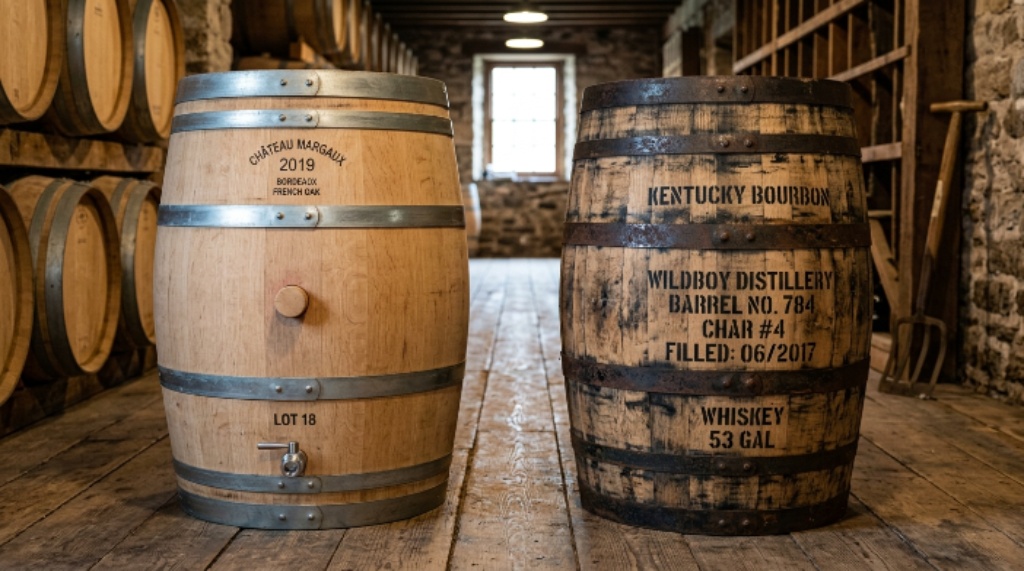
Wine barrels and whiskey barrels may look similar, but they serve different purposes and create different flavor profiles. Wine barrels usually use toasted oak and support subtle aging, while whiskey barrels often use heavily charred oak that adds bold vanilla, caramel, and spice flavors.
Oak barrels have shaped premium wines and whiskeys for centuries because they improve flavor, texture, aroma, and aging. A standard whiskey barrel commonly holds about 53 gallons, while many traditional wine barrels hold close to 60 gallons. These size differences affect wood contact and aging speed. Moreover, barrel preparation methods create distinct results that define each beverage. Understanding these differences helps producers, collectors, and enthusiasts appreciate why barrel selection matters so much.
Why Oak Barrels Matter
Oak remains the preferred wood because it offers strength, flexibility, and controlled oxygen exchange. Small amounts of oxygen slowly enter the barrel and improve maturation.
Natural compounds inside oak add vanilla, spice, coconut, toast, and caramel notes. Therefore, barrel selection becomes one of the most important production decisions.
Wine Barrels and Whiskey Barrels Have Different Goals
Wine barrels aim to support fruit character without overpowering it. Their influence should remain balanced throughout aging.
Whiskey barrels actively shape the spirit because fresh oak contributes much of its color and flavor. Consequently, distillers often depend heavily on barrel quality.
Oak Types Used
Wine Barrel Oak
Wine producers frequently select French oak or American oak. Each variety produces unique aromas and tannin levels.
French oak generally offers elegant spice and refined structure. Meanwhile, American oak provides stronger vanilla and coconut characteristics.
Whiskey Barrel Oak
Most whiskey barrels use American white oak because it remains durable and naturally watertight. This oak also contains compounds that produce sweet flavors.
Additionally, American white oak responds well to charring. That process creates deeper caramelized notes during maturation.
Toasting Versus Charring
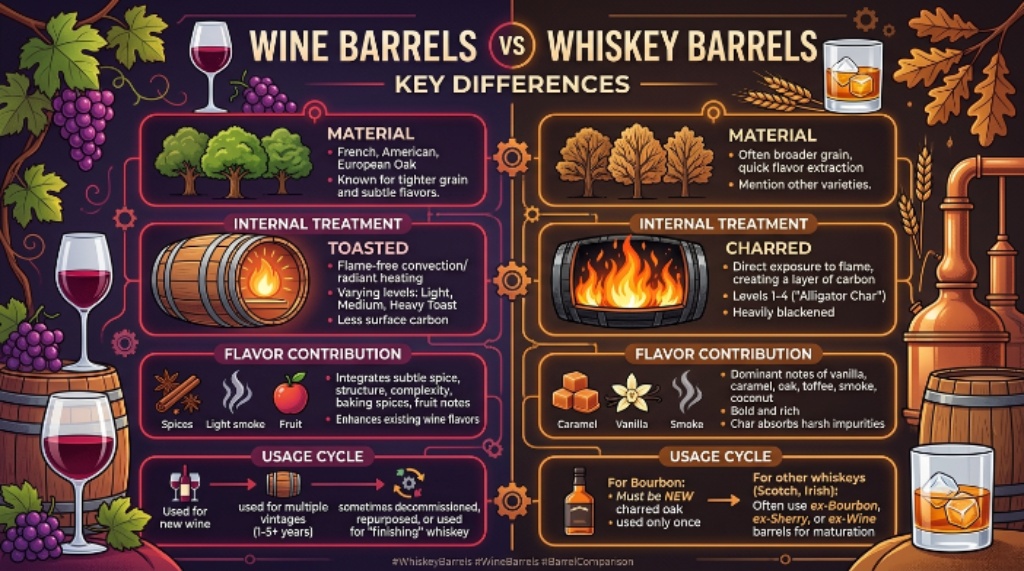
The biggest visible difference appears inside the barrel. Production methods separate wine barrels from whiskey barrels immediately.
Wine Barrel Toasting
Winemakers gently toast the interior over controlled heat. Toasting releases pleasant wood aromas without burning the surface.
Different toast levels create different flavor profiles.
- Light toast preserves fresh oak notes.
- Medium toast adds vanilla and baking spices.
- Heavy toast introduces roasted flavors.
Whiskey Barrel Charring
Distillers burn the barrel interior until a black charcoal layer develops. This char layer acts like a natural filter during aging.
Furthermore, charring creates caramel, smoke, maple, and vanilla flavors. It also helps remove unwanted compounds from the spirit.
Barrel Construction Differences
Wine barrels usually receive greater cosmetic attention because wineries often display them during tours. Smooth finishes and clean surfaces remain common.
Whiskey barrels focus more on durability than appearance. Minor wood imperfections may still perform well during aging.
Steel hoops hold both barrel types together. However, whiskey barrels often use darker hoops, while wine barrels commonly feature cleaner finishes.
Standard Barrel Sizes
Barrel size changes the speed of maturation. More wood contact creates stronger barrel influence.
| Barrel Type | Typical Capacity | Aging Effect |
| Wine Barrel | Around 59 to 60 gallons | Slower flavor extraction |
| Whiskey Barrel | Around 53 gallons | Faster wood interaction |
Smaller barrels increase contact between liquid and oak. Therefore, aging generally happens more quickly.
Barrel Seasoning
Fresh oak contains harsh compounds that require removal before barrel construction. Seasoning prepares the wood for production.
Wine cooperages often season oak outdoors for several years. Rain, wind, and sunlight naturally soften the wood.
Many whiskey barrel producers use kiln drying because it speeds production. However, some premium distillers also prefer naturally seasoned oak.
Aging Process
Wine Aging
Wine develops gradually inside toasted barrels. Gentle oxygen exposure softens tannins while improving texture.
New barrels provide stronger oak influence during the first filling. Later uses produce subtler results.
Whiskey Aging
Whiskey extracts flavor aggressively from charred oak. Seasonal temperature changes move the spirit deeper into the wood.
Expansion and contraction repeatedly draw flavor compounds from the barrel. Consequently, whiskey gains color and complexity faster.
Flavor Differences
Wine barrels produce elegant flavors that support grape character. Their influence should never dominate the finished wine.
Common wine barrel flavors include:
- Vanilla
- Baking spice
- Cedar
- Toast
- Cocoa
- Soft smoke
Whiskey barrels create bolder flavor development because fresh charred oak contributes much stronger compounds.
Typical whiskey barrel flavors include:
- Caramel
- Vanilla
- Brown sugar
- Maple
- Oak spice
- Char
- Light smoke
Oxygen Exposure
Both barrel types allow tiny amounts of oxygen into the liquid. This process remains essential during maturation.
Wine becomes smoother because tannins gradually soften. Likewise, whiskey develops richer aromas through slow oxidation.
Controlled oxygen exposure separates barrel aging from stainless steel storage.
Barrel Reuse
Wine barrels often remain useful for several years. Each refill reduces oak intensity.
Winemakers frequently move older barrels into secondary production. These barrels continue supporting maturation without adding excessive wood flavors.
Many whiskey regulations require new barrels for specific styles. After their first use, those barrels often receive second lives elsewhere.
Used whiskey barrels commonly age:
- Scotch whisky
- Irish whiskey
- Rum
- Tequila
- Beer
- Wine
Legal Requirements
Some spirits have strict barrel regulations. These laws protect traditional production methods.
Bourbon must age inside new charred American oak barrels. Producers cannot reuse those barrels for another bourbon batch.
Wine production usually offers greater flexibility. Winemakers select barrel age, toast level, oak species, and barrel size according to style.
Cost Differences
Wine barrels often cost more because premium oak receives careful selection and longer seasoning. High quality French oak increases production expenses.
Whiskey barrels generally cost less individually because production emphasizes volume. However, regulations requiring new barrels increase long term operating costs.
Maintenance Needs
Both barrel types require regular inspection. Small leaks can quickly become expensive problems.
Proper humidity prevents excessive drying. Clean storage conditions also reduce contamination risks.
Routine maintenance includes:
- Checking for leaks
- Monitoring humidity
- Inspecting metal hoops
- Cleaning exterior surfaces
- Rotating inventory
Which Barrel Lasts Longer?
Wine barrels usually remain in winery service for several years before becoming neutral. Afterward, many continue serving other industries.
Whiskey barrels often leave their original distillery after one use. Nevertheless, they frequently continue aging other beverages worldwide.
Therefore, neither barrel becomes waste immediately. Both support a long reuse cycle across different products.
Which Barrel Creates More Flavor?
Fresh whiskey barrels usually contribute stronger flavors because heavy charring increases extraction. They dramatically influence the finished spirit.
Wine barrels provide gentler flavor changes. Their purpose centers on balance rather than dominance.
The better choice depends entirely upon the beverage being produced.
Choosing Between Wine and Whiskey Barrels
Consider these factors before selecting a barrel:
- Desired flavor intensity
- Aging duration
- Oak variety
- Toast or char level
- Legal production requirements
- Budget
- Reuse plans
Matching the barrel with production goals delivers better final results.
Common Misconceptions
Many people believe every oak barrel works the same way. In reality, construction methods create major differences.
Another misconception suggests char simply creates smoke flavor. Instead, char mainly develops sweetness, complexity, and natural filtration.
Some also assume older barrels become useless. Actually, neutral barrels remain valuable for controlled aging.
Conclusion
Wine barrels and whiskey barrels share the same basic purpose but achieve very different results through oak selection, preparation, and aging methods. Understanding these differences helps producers make better decisions and allows enthusiasts to appreciate every sip with greater confidence. Explore different barrel aged wines and whiskeys to experience how oak transforms flavor in unique ways.
FAQs
Are wine barrels charred like whiskey barrels?
No, wine barrels are usually toasted instead of heavily charred.
Why do whiskey barrels use char?
Char creates caramelized flavors and naturally filters the aging spirit.
Can whiskey age in old wine barrels?
Yes, many producers finish whiskey in used wine barrels for additional flavor.
Which barrel adds stronger oak flavor?
Fresh charred whiskey barrels generally add stronger oak flavors than wine barrels.
Can wine barrels be reused?
Yes, wineries often reuse barrels until their oak influence becomes very mild.