

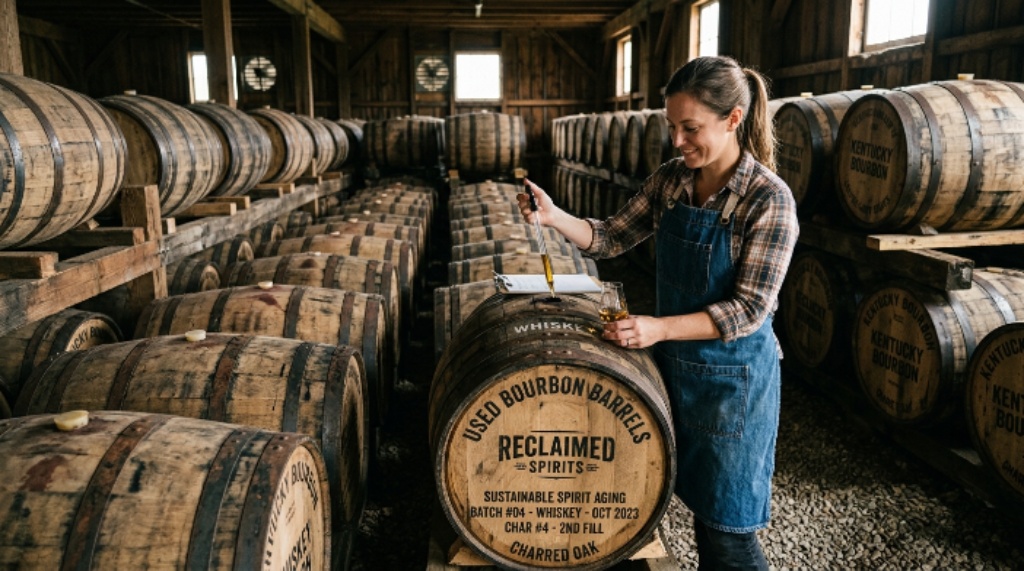
Used bourbon barrels are one of the best sustainable aging solutions because they add rich oak character while reducing material waste. They also deliver natural vanilla, caramel, spice, and toasted wood flavors that improve many beverages and specialty foods.
Bourbon producers use new charred American oak barrels for their first aging cycle. Afterward, those barrels remain valuable because they still contain flavorful compounds and excellent structural strength.
More than 90% of a spirit’s flavor can develop through barrel interaction during aging, while millions of used bourbon barrels enter secondary markets every year. These barrels support sustainable production because they enjoy multiple useful lives instead of becoming waste. As a result, breweries, wineries, distilleries, food makers, and craftspeople continue using them for premium products. Their lasting value makes them one of the smartest investments for flavor focused producers.
Why Used Bourbon Barrels Are So Valuable
Used bourbon barrels deliver both environmental and production benefits. They reduce demand for newly manufactured barrels while preserving excellent aging performance.
Each barrel carries natural flavor compounds from charred American oak. Consequently, producers gain complexity without relying on artificial flavoring.
Natural Flavor Development
The first bourbon aging cycle leaves behind desirable wood characteristics. These remaining compounds continue enriching future products.
Common flavor notes include:
- Vanilla
- Caramel
- Toasted oak
- Baking spices
- Light smoke
- Coconut
- Brown sugar
Different products highlight these flavors in unique ways. Therefore, aging results always depend on the liquid, storage conditions, and aging duration.
Sustainable Production
Reusing barrels supports a circular production model. Manufacturers reduce waste while extending the life of premium oak.
This approach also helps conserve valuable hardwood resources. Furthermore, fewer new barrels are required for secondary aging applications.
How Used Bourbon Barrels Create Flavor
Oak works as more than a storage container. Instead, it actively shapes aroma, color, texture, and finish.
Tiny pores inside the wood allow controlled oxygen movement. This slow interaction softens harsh characteristics and builds complexity over time.
Meanwhile, the charred interior filters certain compounds. As a result, the finished product often develops greater smoothness and balance.
Popular Uses for Used Bourbon Barrels
Many industries benefit from ex bourbon barrels. Their versatility creates opportunities far beyond whiskey production.
Common applications include:
- Scotch whisky aging
- Irish whiskey maturation
- Rum finishing
- Tequila aging
- Craft beer aging
- Wine finishing
- Maple syrup aging
- Hot sauce production
- Coffee aging
- Specialty vinegar production
Each product absorbs different flavor characteristics. Consequently, producers often experiment with aging times to achieve unique results.
Why Breweries Love Bourbon Barrels
Craft breweries frequently age strong beers inside bourbon barrels. This process creates bold flavors unavailable through stainless steel tanks.
Imperial stouts respond especially well during barrel aging. Likewise, barleywines and strong porters gain additional richness.
Brewers often notice improvements including:
- Fuller body
- Softer bitterness
- Better aroma
- Longer finish
- Increased flavor complexity
Proper monitoring remains essential throughout aging. Otherwise, excessive oak influence may overpower the original beer profile.
Benefits for Wineries
Winemakers also use bourbon barrels to create distinctive finished wines. The previous bourbon character adds depth without masking fruit flavors.
Red wines usually benefit from longer finishing periods. Meanwhile, certain dessert wines also develop interesting caramel and spice notes.
Careful tasting throughout maturation helps determine the ideal finishing point. Therefore, experienced cellar management remains extremely important.
Specialty Food Applications
Used bourbon barrels have expanded beyond beverage production. Food manufacturers now create premium barrel aged products with impressive flavor.
Popular examples include:
- Honey
- Maple syrup
- Soy sauce
- Hot sauce
- Mustard
- Vinegar
- Coffee beans
- Chocolate
Consumers increasingly appreciate naturally developed flavors. Consequently, barrel aged specialty foods continue gaining popularity.
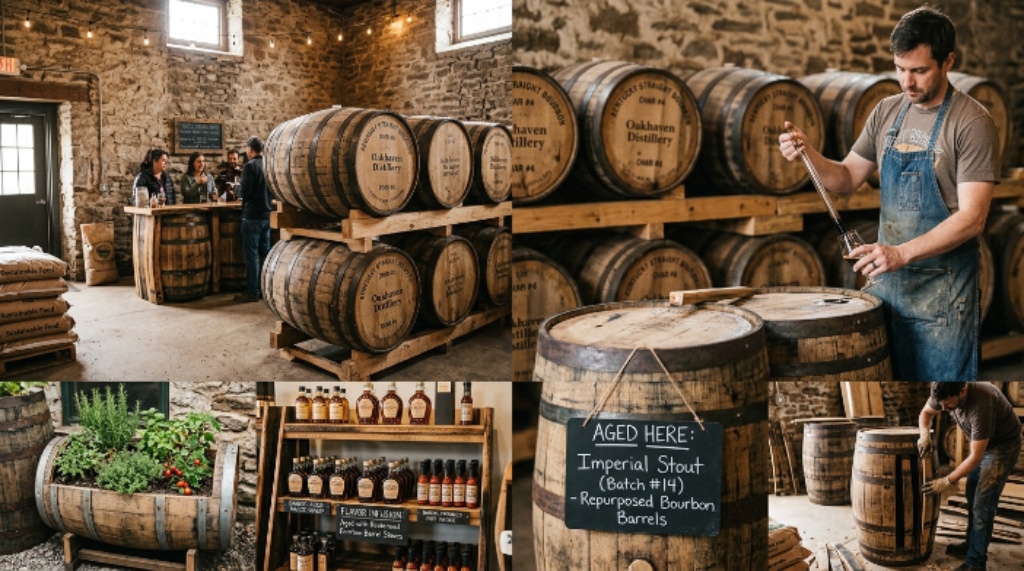
Choosing High Quality Used Bourbon Barrels
Not every used barrel performs equally well. Careful inspection prevents expensive production problems later.
Look for these important qualities:
- Strong structural integrity
- Tight barrel hoops
- Clean interior
- Pleasant oak aroma
- Proper moisture level
- No mold damage
- Minimal cracking
- Reliable storage history
Quality inspection protects both flavor and safety. Therefore, buyers should never overlook barrel condition.
Barrel Size Matters
Standard bourbon barrels hold approximately fifty three gallons. However, smaller barrels also serve certain specialty applications.
Small barrels accelerate wood interaction because they provide greater surface contact. Nevertheless, they require closer monitoring during aging.
Large barrels usually support slower flavor development. Therefore, producers often select size according to production goals.
Proper Barrel Storage
Correct storage extends barrel life significantly. Poor conditions quickly reduce aging performance.
Maintain these best practices:
- Store barrels away from direct sunlight.
- Keep moderate humidity levels.
- Prevent excessive drying.
- Rotate inventory regularly.
- Inspect for leaks frequently.
- Clean carefully after use.
Consistent storage conditions protect both wood quality and future flavor development.
Factors That Influence Aging Results
Several variables affect the finished product. Managing them carefully produces more predictable outcomes.
Important factors include:
- Storage temperature
- Humidity
- Aging duration
- Barrel condition
- Previous barrel contents
- Product proof
- Warehouse airflow
Even small changes can influence the final flavor profile. Consequently, producers often document every aging batch carefully.
Environmental Advantages
Used bourbon barrels support responsible resource management. Every additional use delays disposal and reduces manufacturing demand.
American white oak requires decades to mature naturally. Therefore, extending barrel life provides meaningful environmental value.
Reusing barrels also supports local cooperages, craft producers, and secondary markets. As a result, the entire supply chain benefits from sustainable practices.
Common Mistakes to Avoid
New producers sometimes rush the aging process. Unfortunately, this often creates disappointing results.
Avoid these common mistakes:
- Ignoring barrel sanitation
- Aging too long
- Using damaged barrels
- Storing barrels in dry environments
- Skipping routine inspections
- Overlooking flavor testing
Regular evaluation helps prevent quality issues before they become expensive.
Is Buying Used Bourbon Barrels Worth It?
For many businesses, the answer is yes. Used bourbon barrels combine sustainability with premium flavor enhancement.
They often cost less than new specialty barrels while delivering outstanding aging potential. Additionally, they provide authentic oak character that customers appreciate.
Producers seeking distinctive products frequently view them as long term investments rather than simple containers.
Conclusion
Used bourbon barrels offer an outstanding combination of sustainability, flavor development, and long lasting value. Their natural oak character improves spirits, beer, wine, and specialty foods while supporting responsible resource use. If you want richer flavors with environmentally conscious production, investing in quality used bourbon barrels remains one of the smartest aging decisions available.
FAQs
Can used bourbon barrels be reused multiple times?
Yes, they can age many different products after their original bourbon use.
What flavors do used bourbon barrels add?
They commonly add vanilla, caramel, oak, spice, toasted wood, and light smoky notes.
Are used bourbon barrels environmentally friendly?
Yes, reusing them reduces waste and extends the useful life of valuable American oak.
How long do used bourbon barrels last?
Proper care allows many barrels to remain useful through several additional aging cycles.
Which products benefit most from used bourbon barrels?
Whiskey, rum, beer, wine, maple syrup, coffee, vinegar, and specialty sauces all benefit from barrel aging.