

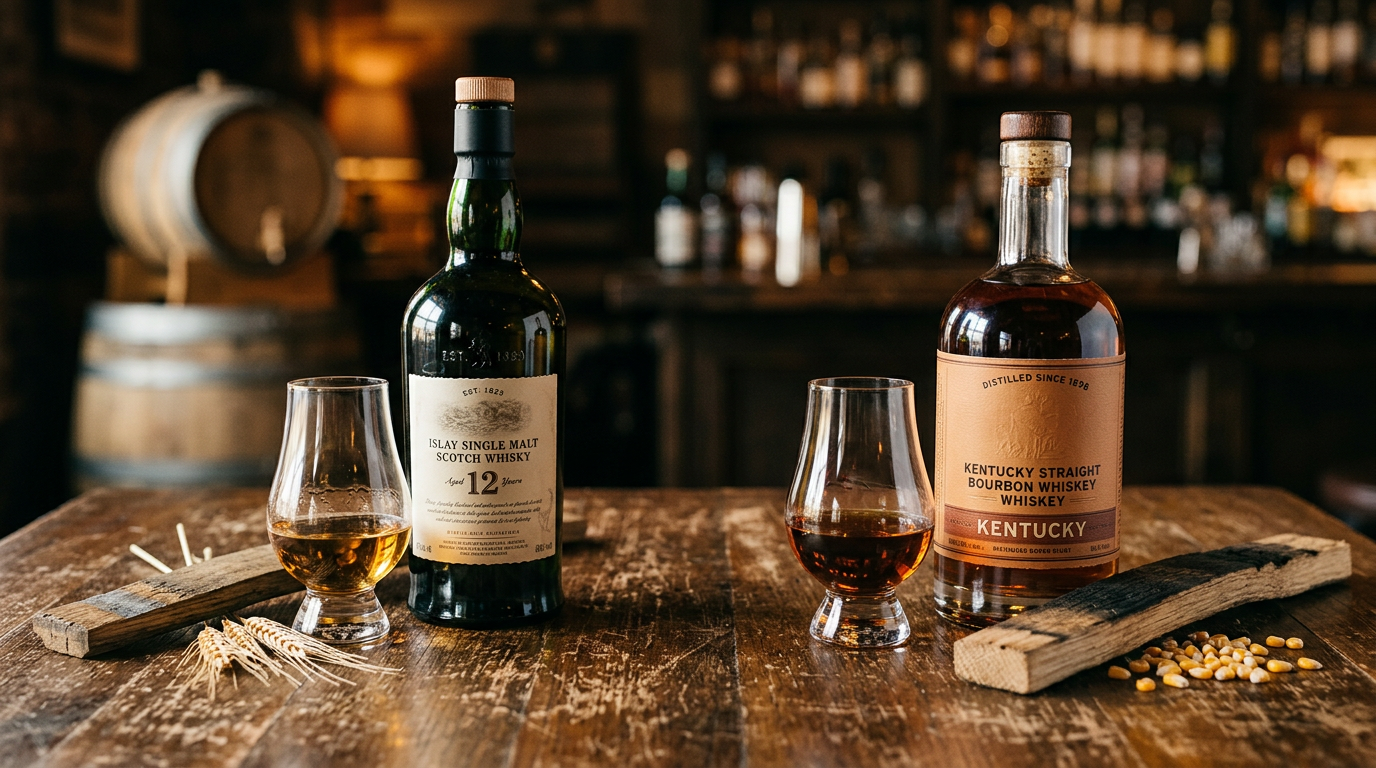
Whisky vs bourbon vs scotch confuses plenty of shoppers standing in the spirits aisle. The labels look similar, the amber liquid looks similar, and the prices swing wildly. Yet the three sit in different legal categories, taste different, and suit different occasions.
Quick answer: All bourbon is whisky, and all scotch is whisky, but neither is a synonym for the other. Bourbon must be American and mostly corn; scotch must be Scottish and aged at least three years. Pick bourbon for sweetness and value, scotch for smoky complexity, and other whiskies for variety.
This guide compares them across production rules, flavor, price, and serving style. By the end, you will know exactly which bottle fits your taste and budget.
Side-by-side comparison
The fastest way to sort these spirits is a single glance at the rules. The table below compares the three across the factors that actually drive a purchase.
| Feature | Whisky (general) | Bourbon | Scotch |
|---|---|---|---|
| Origin rule | Any country | United States only | Scotland only |
| Main grain | Varies by region | At least 51% corn | Malted barley (single malt) |
| Minimum age | Varies by country | No legal minimum | 3 years |
| New barrel required | No | Yes (charred oak) | No (used casks) |
| Typical price (750 ml) | $25–$60 | $25–$45 | $35–$80 |
| Signature flavor | Varies | Vanilla, caramel, oak | Smoke, malt, brine |
| Best use case | Exploring variety | Cocktails and everyday sipping | Slow sipping and gifting |
Notice that “whisky” is the umbrella term. Bourbon and scotch are specific types that sit underneath it, alongside rye, Irish whiskey, and Japanese whisky.
In our tasting sessions, the price gap surprised us most. A solid bourbon at $30 often matched a $55 entry-level scotch for smoothness, though it never replicated the smoke. Budget alone rarely predicts quality in any category.
Beyond the headline rules, a few labeling details deserve a closer look before you commit. Bourbon bottles may carry the word “straight,” which means the spirit aged at least two years and contains no added color or flavor; “bottled in bond” adds a further guarantee of at least four years in a federally bonded warehouse at 100 proof. Scotch labels work differently: “single malt” means one distillery and only malted barley, while “blended” mixes grain whisky from several distilleries, often at a lower price. A “single grain” scotch sits in between and can offer remarkable value.
Age statements also read differently across the categories, since a scotch age statement reflects the youngest whisky in the bottle, and bourbon age statements, when present, follow the same youngest-whisky logic. Proof is another practical comparison point. Most bourbon reaches the shelf at 80 to 90 proof, and cask-strength releases climb past 120 proof. Scotch typically bottles at 80 proof, with cask strength often landing near 116 to 120 proof. Higher proof means more flavor concentration but also more burn, so newcomers may prefer to start lower and add water as needed. Barrel entry proof differs too: bourbon usually enters the barrel at 125 proof or below, while scotch distilleries commonly fill casks near 63.5% alcohol and dilute at bottling. These numbers help explain why a 90-proof bourbon can feel bolder than an 80-proof scotch of similar age.
Key differences explained
The climate gap drives the biggest hidden difference. Kentucky swings from humid summers to cold winters, so bourbon expands into the wood in summer and contracts in winter, pulling color and tannin fast. Scotland stays damp and mild, so scotch matures slowly and evenly, which is why a twelve-year-old scotch can taste fresher than a six-year-old bourbon. Warehouse placement matters just as much as country: upper floors of a Kentucky rickhouse run hotter and age faster, so producers rotate barrels to keep batches consistent. Scotch distilleries often age near the coast, where salty air creeps into the cask over a decade. Neither approach is superior, but the pace of maturation explains why bourbon rarely benefits from extreme age while scotch often does.
Grain, origin, and the legal rules
Bourbon has the strictest grain rule: at least 51% corn, distilled in the US, and aged in new charred oak barrels. Scotch follows Scottish law and usually relies on malted barley. General whisky answers to whichever country makes it, so rules vary widely.
That new-barrel requirement shapes bourbon’s flavor. Fresh charred oak pumps in vanilla and caramel notes. Scotch often reuses casks, sometimes from bourbon producers, so the wood influence stays softer.
Flavor profiles and production choices
Bourbon leans sweet and round. Expect caramel, vanilla, and a warm baking-spice finish. Scotch covers a wider range, from honeyed Speyside malts to peated Islay drams that taste of campfire and sea air.
Age statements tell different stories too. Bourbon ages in a hot, humid climate and often peaks within four to eight years. Scotch matures in cooler conditions and frequently improves over twelve years or more.
Serving traditions
Bourbon drinkers often add ice or mix cocktails like the Old Fashioned. Scotch fans tend to sip neat or with a splash of water. Neither approach is wrong, but the traditions reflect each spirit’s structure.
Key similarities
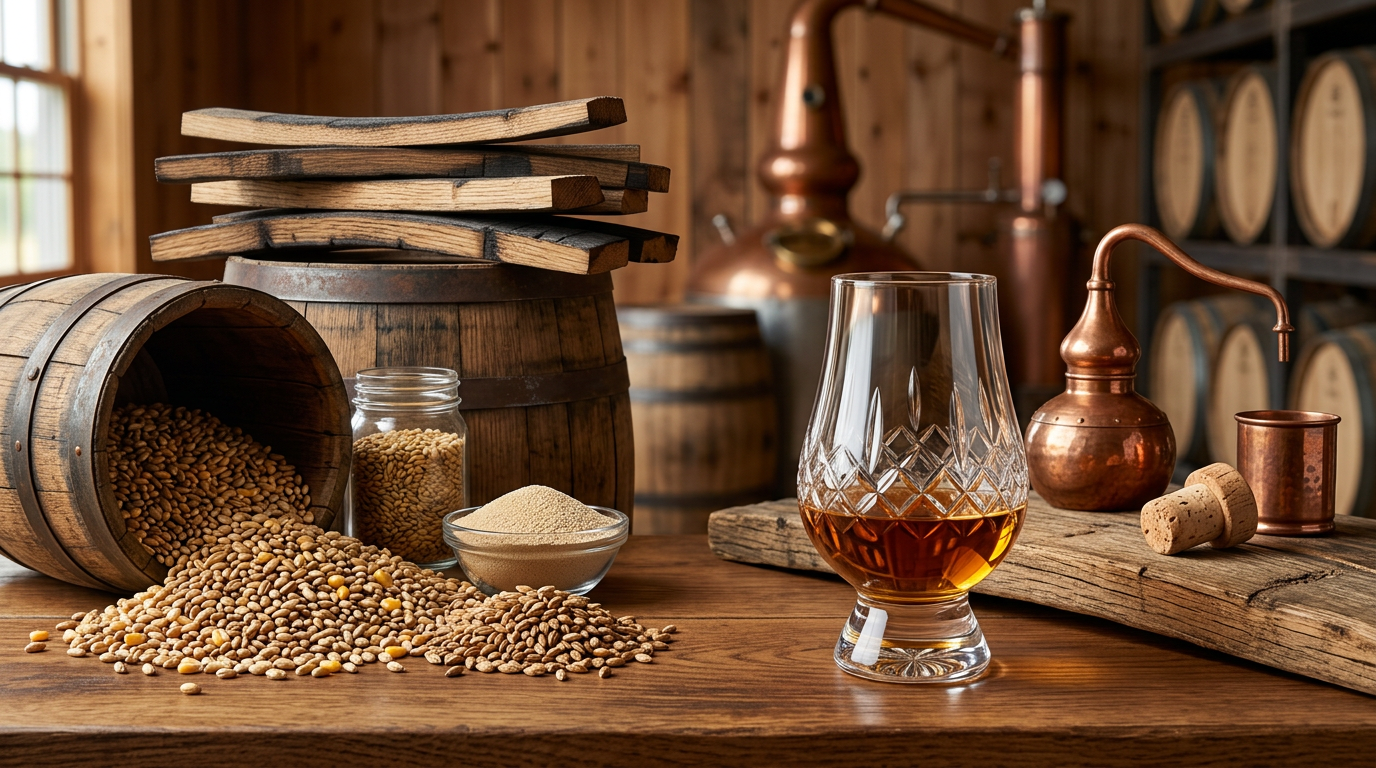
Both bourbon and scotch are protected by trade rules that travel internationally, which means a bottle labeled bourbon sold in Tokyo follows the same American requirements as one sold in Louisville. Both categories also forbid added sweeteners and flavorings at bottling, so the caramel you taste comes from the barrel rather than the bottle. Water is the only permitted addition, used to adjust strength, and chill filtration is common in both to keep the liquid clear when cold. Many distilleries in Kentucky and Scotland now run visitor centers and tasting flights, and both industries rely on the same cooperages for oak, so a barrel maker in Missouri may supply casks to a Kentucky rickhouse and a Speyside warehouse alike. That shared supply chain is one reason the two styles can echo each other on the palate.
Shared craft and shared base
Every one of these spirits starts as a grain mash that is fermented, distilled, and aged in oak. That shared process explains why the categories overlap on the palate. Vanilla, oak, and dried fruit notes appear across all three.
Age also matters everywhere. Even where the law sets no minimum, producers age their spirit because barrel time smooths harsh alcohols. A young release from any category tastes sharper than a well-aged one.
Comparable strength and storage
Bottled strength usually lands between 40% and 46% alcohol by volume for all three. Cask-strength versions push higher in every category. Storage advice is identical too: keep bottles upright, away from sunlight, and sealed tightly.
Overlapping cocktail use
Bartenders swap bourbon for scotch in many recipes. A Whisky Sour or Highball works with either, though the smoke in peated scotch will dominate. We found bourbon blends more quietly into mixed drinks, while scotch tends to announce itself.
These similarities mean you can learn one category and transfer much of that knowledge. Tasting vocabulary, glassware, and dilution techniques all carry over.
Pros and cons of each option
Whisky as a category
Pros
- Covers a huge range, from rye spice to Japanese elegance
- Entry bottles are affordable and widely available
- Lets you explore without committing to one national style
Cons
- The word alone tells you little about flavor or rules
- Quality varies sharply between producers and countries
- Beginners face a confusing wall of labels
Bourbon
Pros
- Sweet, approachable flavor suits newcomers
- Strong value at the $25–$40 mark
- Works beautifully in classic American cocktails
Cons
- New-barrel rules limit the influence of long aging
- Sweetness can feel one-note to peat-loving palates
- Strict rules leave less room for experimental cask programs
Scotch
Pros
- Enormous stylistic range, from honeyed to heavily smoky
- Long aging traditions produce remarkable complexity
- Strong gift appeal and collector demand
Cons
- Entry prices run higher than comparable bourbon
- Peated expressions divide drinkers sharply
- Age statements push premium bottles past $80 quickly
Honest caveat: personal taste outweighs every pro and con above. We have watched self-described bourbon fans fall for a smoky scotch, and scotch loyalists enjoy a wheated bourbon.
Which should you choose?
Consider how you actually drink before choosing a category. If most of your pours happen at a kitchen counter with a book or a podcast, a scotch that rewards slow attention makes sense. If bottles disappear at parties and mixers do the heavy lifting, buy bourbon in volume and keep one special bottle tucked away. Household size matters too: a two-person home may take months to finish a $70 scotch, while a crowded apartment empties a $30 bourbon in a weekend. Shelf space is another honest factor, because a modest collection of four or five bottles across categories teaches more than a single expensive purchase. Set a ceiling for your first year of buying, spread it across three or four bottles, and keep brief notes on each. That habit turns a confusing aisle into a personal map faster than any review can.
Choose bourbon if you want value and sweetness
Bourbon is the safest first bottle. Its caramel-and-vanilla profile pleases most palates, and $30 buys genuine quality. If you plan to mix cocktails or host casual gatherings, a bottle of bourbon will empty faster than either alternative.
Choose scotch if you want complexity and smoke
Reach for scotch when flavor exploration is the goal. Start with a Speyside single malt for honeyed softness, then try an Islay bottling for smoke. Expect to pay more, and expect the experience to reward slow sipping rather than quick pours.
Choose general whisky if you enjoy variety
The broad category suits curious drinkers. Rye brings spice, Irish whiskey brings smoothness, and Japanese releases bring precision. Buying across categories teaches your palate faster than staying loyal to one.
Quick buyer’s checklist
Check the label for origin, grain, and age before you buy. Confirm the bottle states “straight bourbon” or “single malt scotch” if those specifics matter to you. Finally, match the bottle to your plan: cocktails favor bourbon, and contemplative evenings favor scotch.
FAQ
Is bourbon always a type of whisky?
Yes. Bourbon meets the broad definition of whisky because it is a distilled grain spirit aged in oak. US law classifies it as whisky, which is why every bourbon is whisky but not every whisky is bourbon.
Why is scotch often more expensive than bourbon?
Scotch carries import costs, longer minimum aging, and often smaller production runs. The three-year legal minimum and cooler climate both slow inventory turnover. Those costs pass to the buyer, especially on age-stated bottles.
Can I substitute one for another in cocktails?
Often, yes, with adjustments. Bourbon brings sweetness, so reduce any added sugar slightly when swapping in scotch. Avoid heavily peated scotch in delicate recipes, because the smoke overwhelms lighter mixers.
What is the most common beginner mistake?
Buying a heavily peated scotch as a first bottle. The smoke shocks many new drinkers. Start with bourbon or a Speyside malt, then work toward peat once you know your preferences.
Does adding water or ice ruin the drink?
No. A few drops of water can open aromas, and ice suits bourbon well. Purists prefer spirits neat, but enjoyment matters more than etiquette.
Conclusion
The labels finally make sense once you separate the umbrella from the specifics. Whisky vs bourbon vs scotch comes down to origin, grain, and barrel rules, and those rules shape flavor and price. Bourbon delivers sweet value, scotch delivers smoky complexity, and general whisky delivers variety.
Our recommended next step: buy one bottle of straight bourbon and one entry-level single malt scotch. Taste them side by side on the same evening and note what you notice. That single comparison will teach you more than any shelf label ever could.